
Quick answer
Columbia Icefield Adventure weather remains cold year-round, with glacier surface temperatures between -5°C and 5°C even in summer. The Athabasca Glacier creates its own microclimate: sudden wind, passing snow squalls, and bright sun can all occur within an hour. Layered insulation, waterproof shells, and closed-toe footwear are required for safe boarding of the Ice Explorer vehicles, regardless of valley conditions at the Discovery Centre.
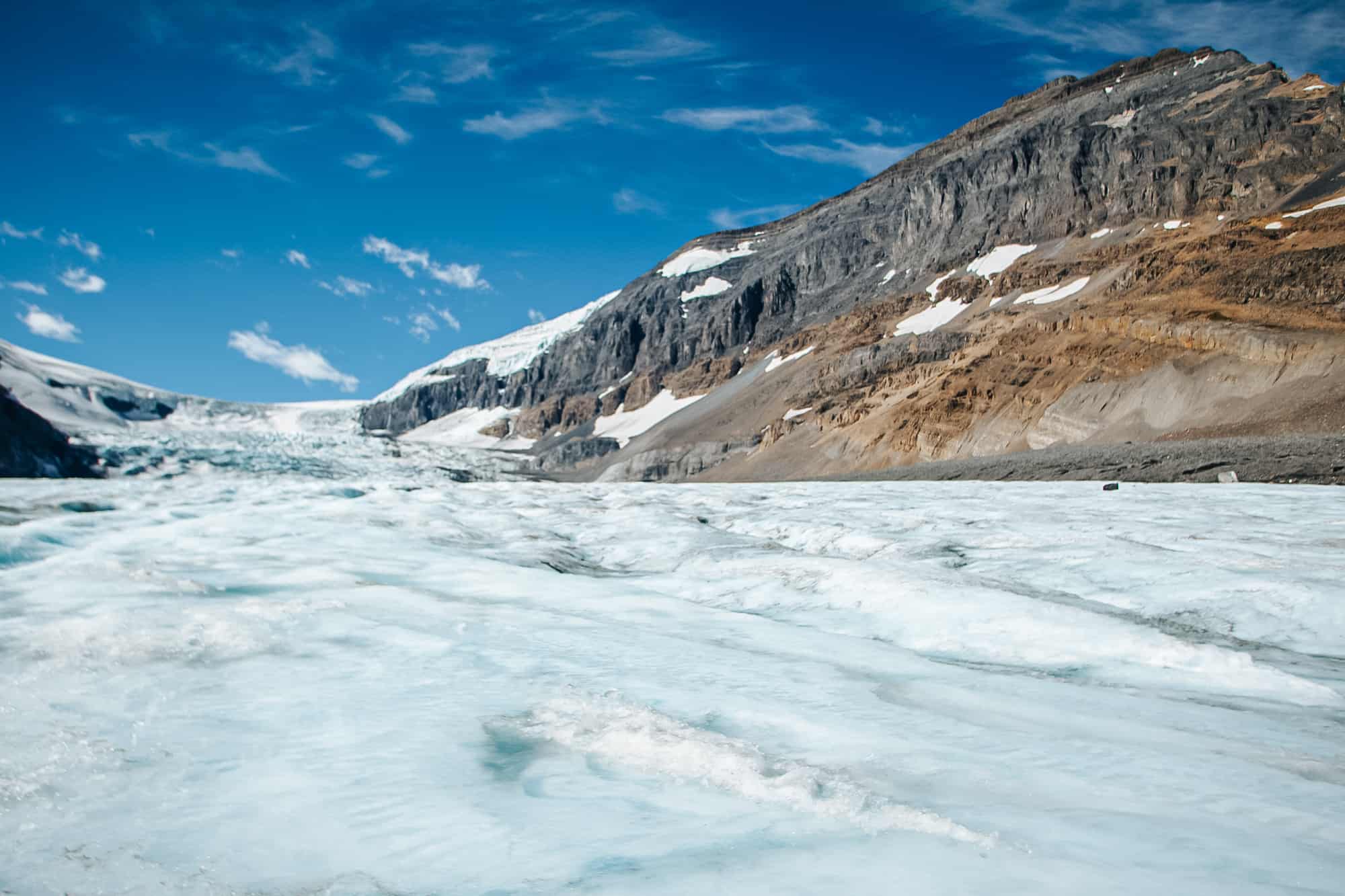
The Athabasca Glacier surface remains below freezing for most of the year, a physical reality that surprises visitors arriving in summer shorts. While the Icefields Parkway valley may reach 20°C on a July afternoon, the glacier itself sits in a permanent alpine climate zone where weather systems move fast and temperature drops with every meter of elevation. Columbia icefield adventure weather follows distinct seasonal patterns. May through September offers the most stable conditions, with daytime highs near the Discovery Centre reaching 10-18°C, though glacier surface temperatures stay significantly colder. Morning tours often encounter fog banks that burn off by midday, revealing clear views of Mount Athabasca and the surrounding peaks. October brings early snow and reduced visibility, while November through April sees full winter conditions with heavy snowfall and road closures on Highway 93. The Ice Explorer vehicles operate in all touring-season weather, but visibility and comfort vary dramatically. Wind on the glacier accelerates heat loss. A calm 2°C feels manageable; the same temperature with 40 km/h gusts requires serious insulation. The ice surface reflects intense UV radiation year-round, making sunglasses and sunscreen necessary even on overcast days. Precipitation arrives without warning—a blue sky can cloud over in fifteen minutes, dropping wet snow that soaks cotton layers and chills unprepared visitors within minutes. The site's weather station records an average of 180 days per year with measurable precipitation, and the glacier creates localized weather that differs from regional forecasts. Tour operators provide the most accurate real-time assessments, but personal preparation matters more than prediction. Waterproof shells, insulating mid-layers, gloves, and hats turn unpredictable conditions into manageable inconvenience rather than misery that cuts a visit short.
“The glacier surface remains below freezing for most of the year, a physical reality that surprises visitors arriving in summer shorts.”
Required Clothing for Columbia Icefield Adventure Weather Conditions
Prepare for variable alpine conditions with layered clothing and protection against UV exposure and wind.
-
Wear moisture-wicking base layers — Glacier temperatures hover near freezing even in summer, requiring insulation that manages perspiration.
-
Bring a waterproof outer shell — Rain and meltwater spray from the ice are common during tours.
-
Pack sunglasses with UV protection — High-altitude sunlight reflects intensely off the glacier surface.
-
Wear sturdy closed-toe footwear — Ice Explorer boarding and glacier surfaces demand ankle support and grip.
-
Apply broad-spectrum sunscreen — UV exposure increases approximately 10% per 1,000 meters of elevation.
-
Carry a warm hat and gloves — Wind chill on the glacier drops the effective temperature significantly below ambient readings.
Interesting Facts About Columbia Icefield Adventure Weather
The Columbia Icefield environment experiences unique meteorological conditions due to its high altitude and glacial geography. Visitors should prepare for significant temperature variations compared to the surrounding valleys.
15 to 20 degrees Celsius cooler
Temperatures on the Athabasca Glacier are consistently lower than in the town of Jasper or Banff. Travelers often encounter conditions 15 to 20 degrees Celsius cooler than at the base of the mountain.
High-altitude UV exposure
The elevation of the Columbia Icefield increases UV radiation intensity. Atmospheric thinning at these heights requires visitors to utilize sun protection regardless of cloud cover.
Glacial wind chill effects
Katabatic winds frequently descend from the icefield, creating a wind chill factor that can make air temperatures feel freezing. These gusts often accelerate as they move down the glacial slopes.
Constant glacial surface temperature
The surface of the Athabasca Glacier remains near or below freezing throughout the year. Heat transfer from the ice maintains a localized microclimate regardless of summer ambient air temperatures.
Rapid weather shifts
Mountain weather patterns in the Canadian Rockies are volatile and subject to sudden changes. It is common for clear skies to transition to snow or high winds within a short duration.
Elevation above sea level
The Columbia Icefield sits at an elevation ranging from 2,800 to 3,000 meters. This altitude contributes to lower oxygen levels and more extreme weather volatility than lower-lying regions.
Columbia Icefield Adventure Weather and Operational Hours
The Columbia Icefield Adventure operates daily during the season. Please note that operational hours may be subject to change based on weather conditions.
| Monday | 09:00–17:00 | |
|---|---|---|
| Tuesday | 09:00–17:00 | |
| Wednesday | 09:00–17:00 | |
| Thursday | 09:00–17:00 | |
| Friday | 09:00–17:00 | |
| Saturday | 09:00–17:00 | |
| Sunday | 09:00–17:00 |
Check availability
Frequently Asked Questions About Columbia Icefield Adventure Weather
Everything you need to know about columbia icefield adventure weather